No smell, steady heat
A clean mini split just moves warm air into the room. No musty smell when it kicks on, no dust smell when it cycles off. The coil and drain pan stay dry enough that nothing can take hold on them.
A mini split that smells when it's heating is usually picking up something that built up in the indoor unit over the summer. Delaware summers run sticky, and all that moisture lets mold and mildew grow on the coil and in the drain pan while the unit is cooling. Once you switch over to heat, the air passes over that same coil and carries the smell into the room. A musty smell points to mold. A smell like dirty socks usually means the coil just needs a cleaning. A burning smell is different and more urgent. It can mean dust burning off a coil that has not run in a while, which clears on its own in a few minutes, or it can mean a wiring or motor problem that needs a technician before you run the unit again. If the smell doesn't fade once the unit has been running for a while, that is your sign to get it looked at rather than live with it.

A clean mini split just moves warm air into the room. No musty smell when it kicks on, no dust smell when it cycles off. The coil and drain pan stay dry enough that nothing can take hold on them.

Dust and discoloration on the casing usually means the same buildup is sitting on the coil behind it. That's what you're smelling when the heat kicks on. A contractor who services these year-round can clean it out before it turns into something worse.
Why does my mini split only smell bad when it's heating, not cooling?
When a mini split cools, the coil stays wet and anything growing on it stays trapped in that moisture, so the smell has nowhere to go. Switch to heat and the coil dries out and warms up. Whatever's been sitting on it since summer, mold, mildew, dust that settled into the film on the coil, gets released into the airstream instead of held in place. That's why the smell shows up the moment heat starts and fades once the unit's been running a while. In Delaware, where summer humidity gives mold months to establish itself on the coil and in the drain pan, this is common once the unit switches over to heat for the fall and winter.

You're at your desk working from home, early afternoon, and the mini split kicks on with that smell again. You glance up and see it this time: a wet streak running down the wall below the indoor unit, soaking into the paint. You grab a towel off the hallway shelf and lay it on the floor under the drip. Outside it's another sticky Delaware afternoon, the kind that's kept this unit running on and off for months. You sit back down, but you keep glancing at the wall, and at the towel, wondering how long that streak was forming before you noticed it.
The indoor coil sits behind the filter, and in cooling mode it runs cold enough that condensation forms on it all summer. Some of that water drips into the drain pan and out through the condensate line, but a film stays on the coil fins themselves. Mold feeds on that film. Switch the unit to heat and the coil goes from cold to warm, and that warmth is what pushes the smell off the coil and into the room instead of leaving it sitting there.
Below the coil, the drain pan catches runoff all summer long, and it's shallow enough that a little standing water sits in the corners between cycles. That water doesn't evaporate fast indoors, so mildew builds along the edges of the pan where it's hardest to see without pulling the cover. A contractor who services mini splits in Delaware checks that pan directly rather than guessing from the smell alone, because a dirty coil and a dirty pan call for different cleaning.
At 17.15 cents per kilowatt-hour, running a mini split to chase a smell with open windows or a unit left on fan mode all day adds up fast. A quick repair to clean the coil and drain pan costs you a lot less than paying to heat air that just leaks back out.
EIA-861 2025 statewide residential average








You've read why the smell is there. What it takes to get rid of it is getting inside the indoor unit, pulling the cover, and cleaning the coil and drain pan properly, not something to sort out with an open window or a fan setting. Someone who services mini splits in Delaware every season knows this pattern well, because the same sticky summers that make your AC work hard are what leave mold and mildew behind on the coil, waiting for heat mode to bring the smell out. Get matched with a licensed local contractor who handles this kind of repair regularly, and only that one contractor gets your request, not a handful of companies competing for your call. They'll reach out to look at your unit and figure out what it needs. Right now your mini split is running with that smell every time it heats, and the room below the indoor unit is paying for it. That's worth handing off.
The compressor stops moving refrigerant and the indoor fan ramps up first
Warm air crosses the coil and picks up whatever dried onto it over summer
That air carries the smell straight out through the vents into the room
The smell fades once the coil bakes dry, then returns on the next cycle



Delaware summers hold a lot of moisture. NOAA data puts the average summer dew point here at 65°F, which is the sticky, heavy-air kind of humid. That moisture doesn't just sit in the yard. It settles into your mini split's indoor coil all June, July and August, and some of it stays as a film even after the unit dries out on the surface. Mold and mildew need exactly that kind of damp to take hold. Come fall, when you switch over to heat, the warm air crosses that coil and carries whatever grew there straight into the room. The smell is this summer's humidity showing up in your living room months later.
NASA POWER T2MDEW county cells weighted by homes
You probably smell it before you think about it. A musty, sour smell for the first minute or two after the mini split switches into heat, then it fades or you stop noticing. Maybe there's a faint dust smell too, like something warm and dirty. If you've looked at the unit itself, the case might have a film of dust on it, or you might have seen a damp spot on the wall underneath. None of that is random. It's the coil and drain pan behind the cover holding onto what built up over summer. Left alone, that moisture doesn't just sit there. It can work into the drywall below the unit and the wall starts holding water it was never built to hold.

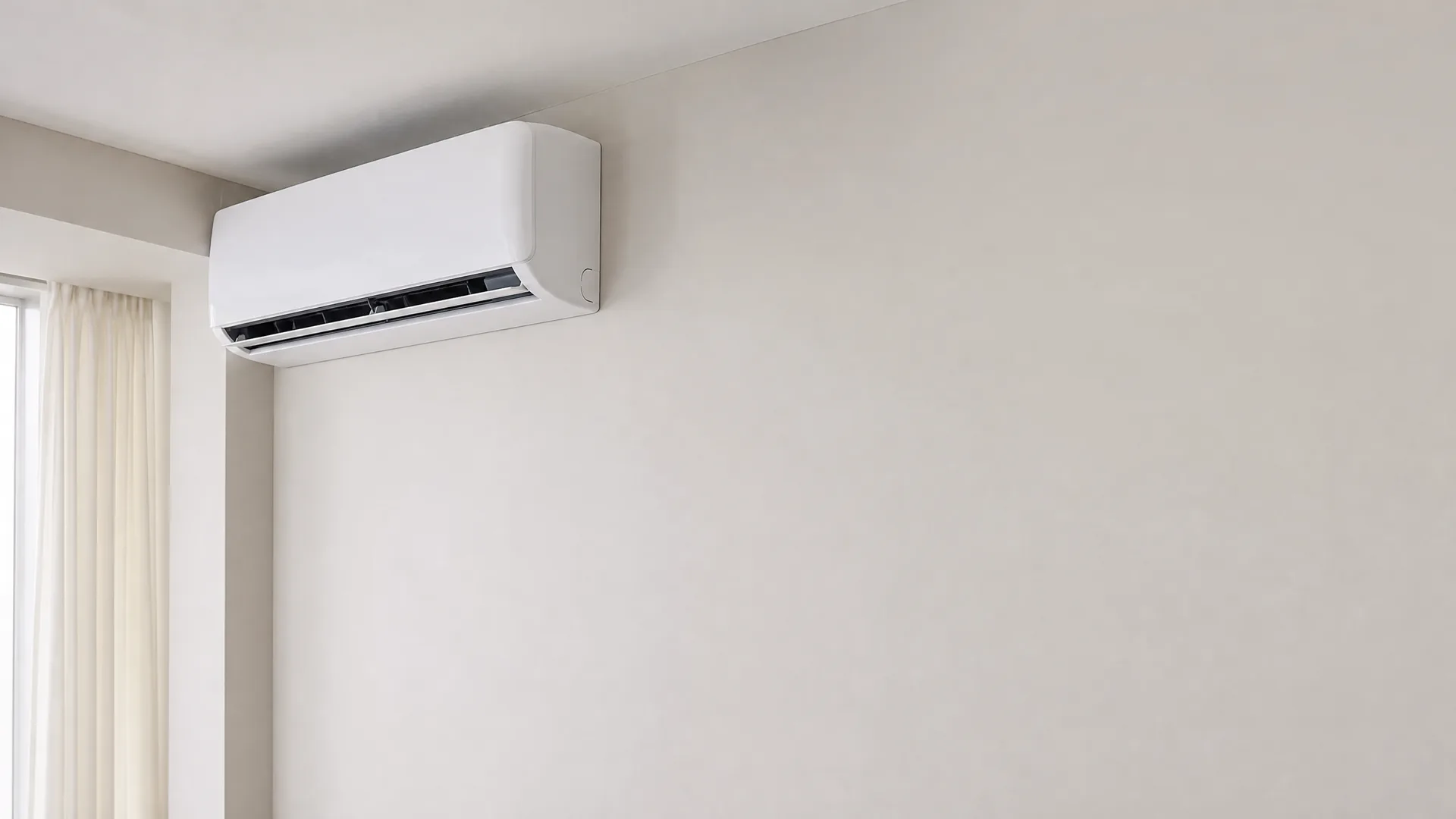
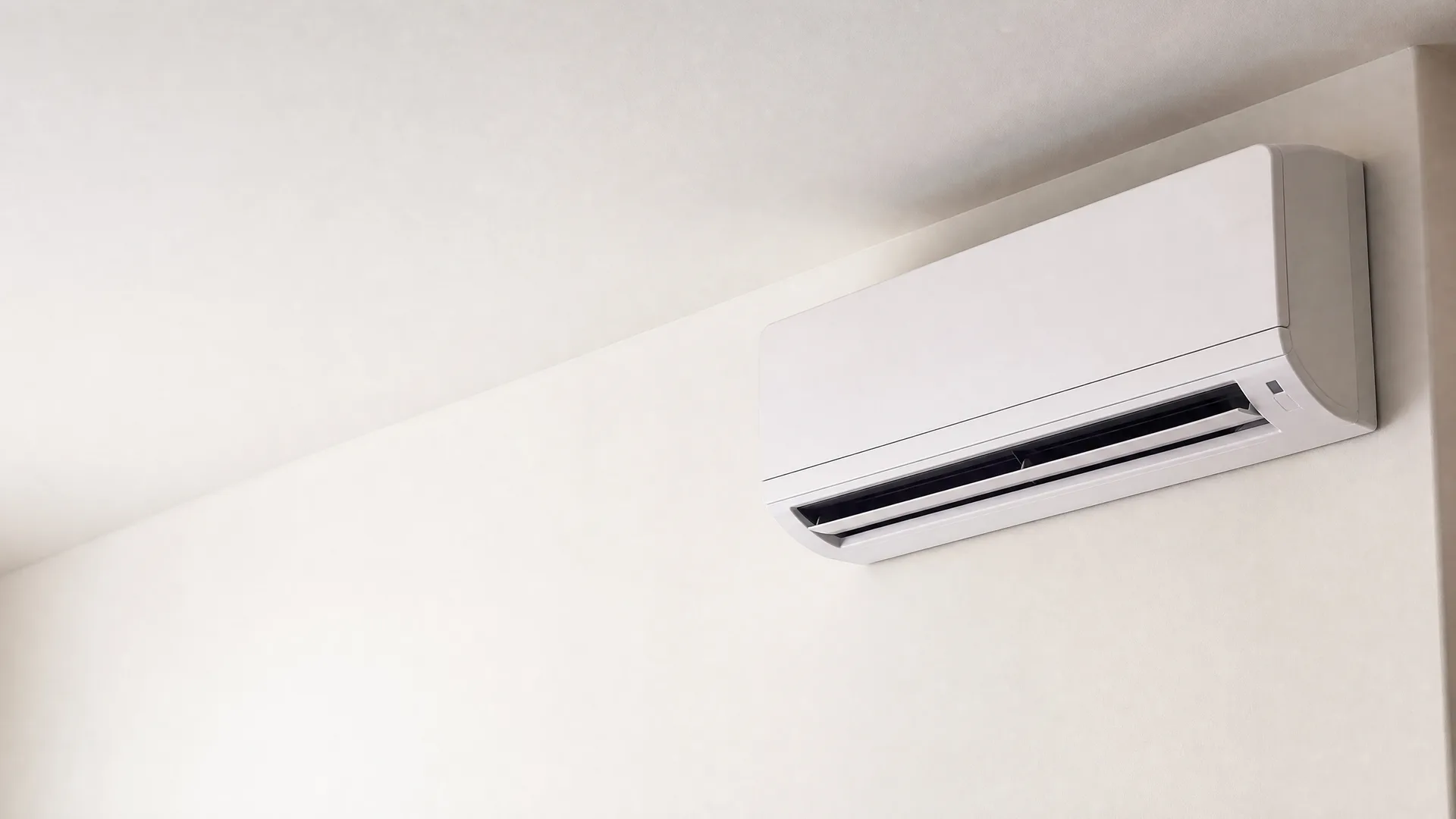
This is what a mini split looks like when nothing's wrong. The vane opens, warm air moves into the room, and the case stays white. No film on the plastic, no smell riding along with the air. The coil behind it is doing its job and nothing else is living on it.

Dust sitting on the case like this is usually a sign, not just a cleaning job you skipped. If the outside is this dirty, the coil behind it has likely gone just as long without attention. That's what's riding on the air when the vane opens, not just what you can see on the plastic.

A mini split that smells when it heats is telling you something built up on the coil and in the drain pan over the summer. That's it. Not the ductwork, not the house, just that one indoor unit doing what Delaware humidity does to a coil that sits wet for months. Clean it out and the smell has nothing left to carry.
Someone who works on mini splits every season in this area has seen this exact pattern plenty of times and knows what to check first. Once you request service, you'll be matched with a licensed local contractor who takes care of this kind of repair, and that one contractor will reach out to you directly. No juggling calls from five different companies, just the one who's actually going to show up and look at your unit.






Only one pro gets your request, so you hear from one company.
You're not committing to anything by asking.