




Why your mini split leaks water in a Delaware winter

Step 1 of 3: Equipment

Why is my mini split leaking water in the winter?

Cold weather is the last time you expect to find water pooling under your indoor unit or dripping down the wall. It feels backwards, water showing up when the heat is running and the air is dry. But a mini split that's leaking in January isn't doing something strange. Something specific is going wrong with it, and it's worth catching before it damages your floor or the wall behind it.

A frozen or blocked drain line, or ice on the coil, is the usual cause

When a mini split runs its heat pump in reverse to warm your home, the outdoor coil can ice up, and during defrost that ice melts into water that has to leave through the drain line. If that line is frozen, cracked, or clogged with debris, the water backs up and finds its way out through the indoor unit instead. A dirty filter or a low refrigerant charge can also cause the indoor coil to ice over, and when it thaws, the same thing happens. With Delaware winters running cold enough for the system to cycle through defrost often, a drain line that isn't pitched or insulated right has more chances to freeze solid.

A woman with dark hair in a bun wearing a cream knit sweater sits on a gray sofa in a bright living room, looking off to the side.
A woman wrapped in a knit blanket sits on a gray sofa in a living room, looking toward a bright window with houseplants and an armchair in the background.
A woman in a gray cowl-neck sweater sits on a light sofa with cushions, smiling and looking to the side, with a kitchen and window visible behind her.
A woman with dark hair in a bun, wearing a light linen shirt, sits on a sofa and looks to the side, with a window, houseplants and a kitchen with pendant lights blurred behind her.

Frozen Coil or Blocked Drain

Frozen Coil Dripping

  • A dirty filter or blocked outdoor unit can cause the coil to ice up even when it's cold outside and the system is heating.
  • When the ice melts between cycles, water runs off the coil faster than the drain pan can collect it and spills onto the floor.
  • This usually comes with weaker heat from the vents, since ice on the coil blocks airflow before it causes a leak.
  • If the unit was short on refrigerant, the coil runs colder than it should and ice forms even on a mild Delaware day in the 40s.

Blocked Condensate Drain

  • Dust, algae or a kink in the drain line stops the water the unit removes from draining outside, so it backs up into the unit.
  • This happens in winter just as it does in summer, since a mini split pulls some moisture out of the air any time it runs.
  • A drain line that slopes the wrong way, or one that was never pitched correctly, lets water sit and leak instead of flowing out.
  • If the outdoor end of the drain line is frozen shut, water has nowhere to go but back into the indoor unit.
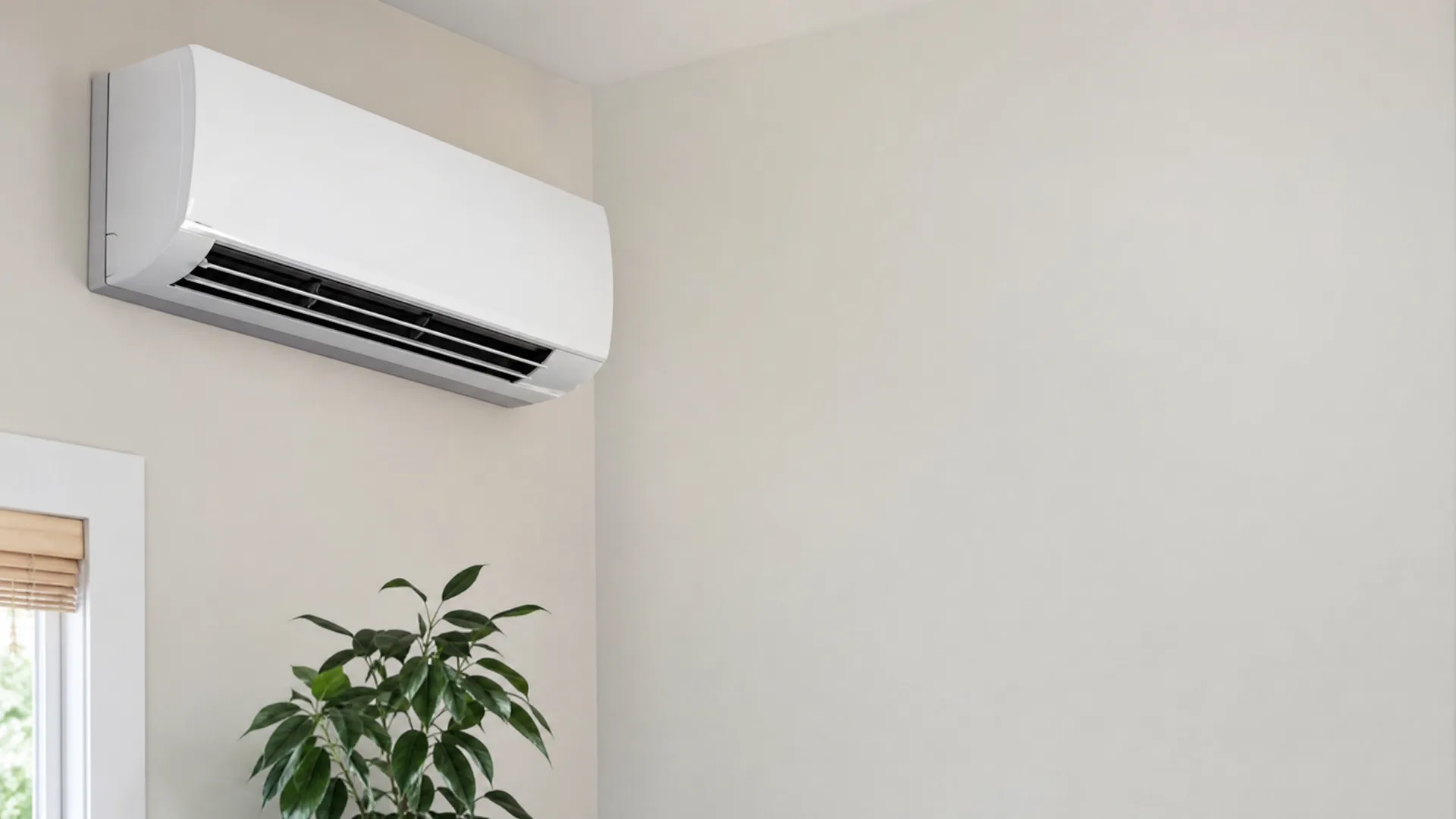
A white wall-mounted mini-split air conditioner on a beige interior wall, with a curtained window on the left and wood flooring with a light rug below.

Running Clean

A mini split that's draining right stays quiet and dry around the indoor unit. No drip marks on the wall, no damp spot on the floor below it. Air moves out of the vents the way it should, and the case stays free of the grime that builds up when condensation keeps finding somewhere wrong to go.


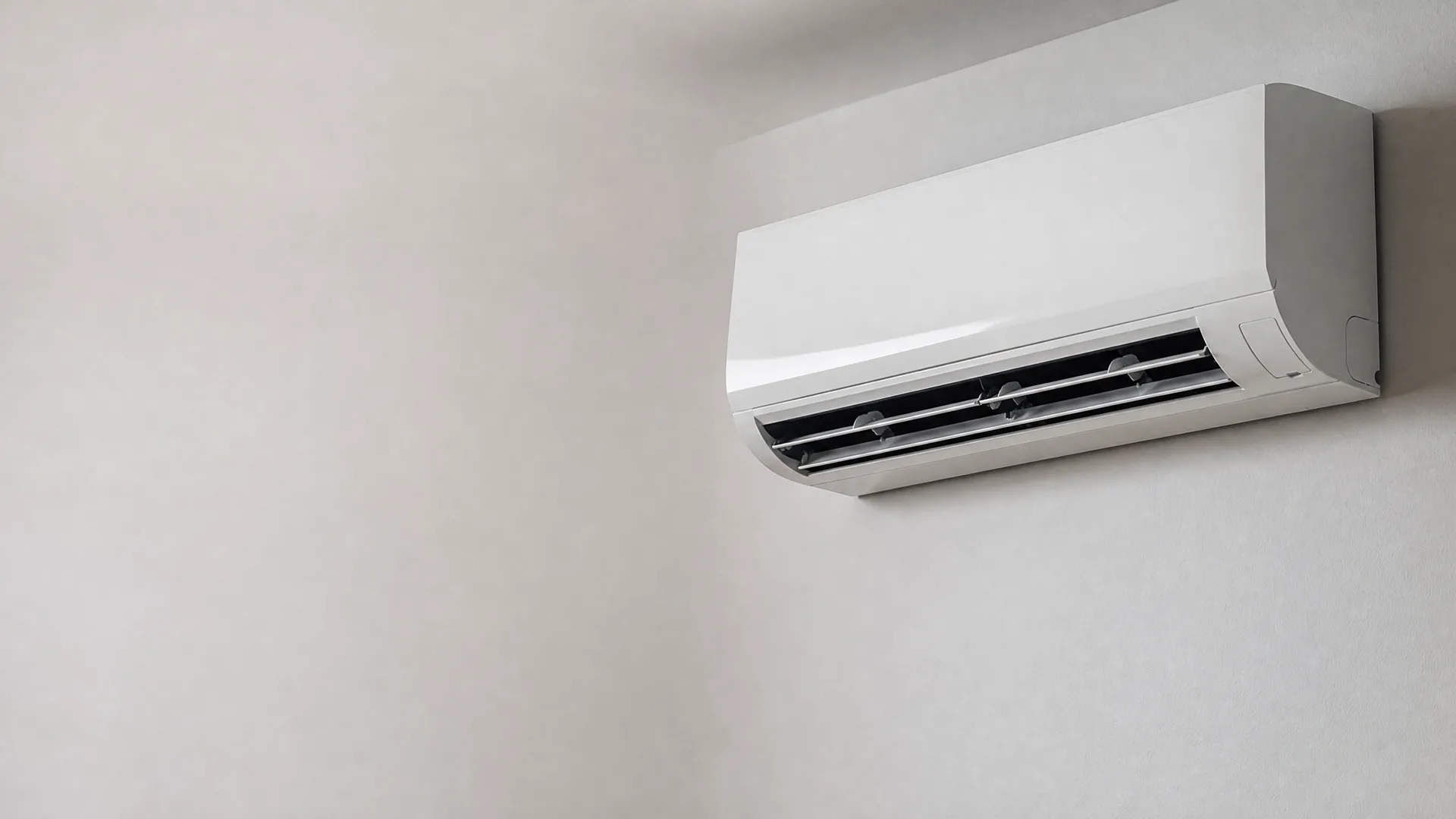
A white wall-mounted mini-split air conditioner indoor unit installed near the ceiling on a plain light-colored wall, with its horizontal outlet vent and louvers visible.

Backed Up and Leaking

Dust and a dingy film on the casing usually mean this unit has been running a while without a cleaning. That buildup can clog the drain path or slow airflow across the coil, and either one sends water where it doesn't belong. The stains on the wall or the puddle below are the proof.

A dusty, discolored wall-mounted mini-split air conditioner indoor unit on a plain white wall, with its horizontal louvers and vent grille visible.
Before you get your mini split repair
A white wall-mounted mini-split air conditioner on a beige interior wall, next to a window with sheer white curtains and green foliage outside.
After you get your mini split repair

The coil drips into a pan, and the pan only works if the line out of it keeps falling toward the outside wall. That slope is doing all the work. Let the line sag even a little, or let algae build up inside it, and water stops moving downhill the way it's supposed to. It pools instead, right there in the pan, and once the pan is full it has nowhere to go but out through whatever gap in the housing is lowest. That's the drip you're seeing on the wall or floor. A blocked line does something else too. It can let air from outside get pulled back through the drain port into the unit, carrying moisture with it that has no business being inside the cabinet in the first place. Some indoor units have a backup pan or a float switch built in just for this, meant to catch the overflow before it reaches the floor. When that part is working, a clog is a nuisance. When it isn't, there's nothing left standing between the clog and the leak you called about.

How the drain line actually fails

  • The indoor unit's drain pan sits under the coil and tilts slightly so condensation runs to a drain port, not out into the room.
  • From that port, a plastic drain line runs downhill to the outside, and the whole system depends on that slope holding.
  • If the line kinks, sags, or picks up algae or dust buildup, water backs up into the pan faster than it can leave.
  • The drain pan has a limited capacity, so once it fills past that point, water finds the lowest gap in the housing and drips out.
  • A clogged or disconnected line can also let outside air pull backward into the unit, which brings in more moisture to freeze or pool.
  • Some units have a secondary pan or float switch meant to catch overflow, and if that part fails, nothing stops the leak.
A smiling older woman with gray hair in a cream knit sweater stands in a dimly lit kitchen beside a window showing snow outside, with a round loaf of bread on the counter in the foreground.
A woman and a child wrapped together in a thick knitted blanket on a sofa, both with eyes closed, with a lit table lamp and houseplant in the dim background.

A mini split pro near you

Send the request today and let a mini split pro reach out to you.

Sending the form costs nothing.

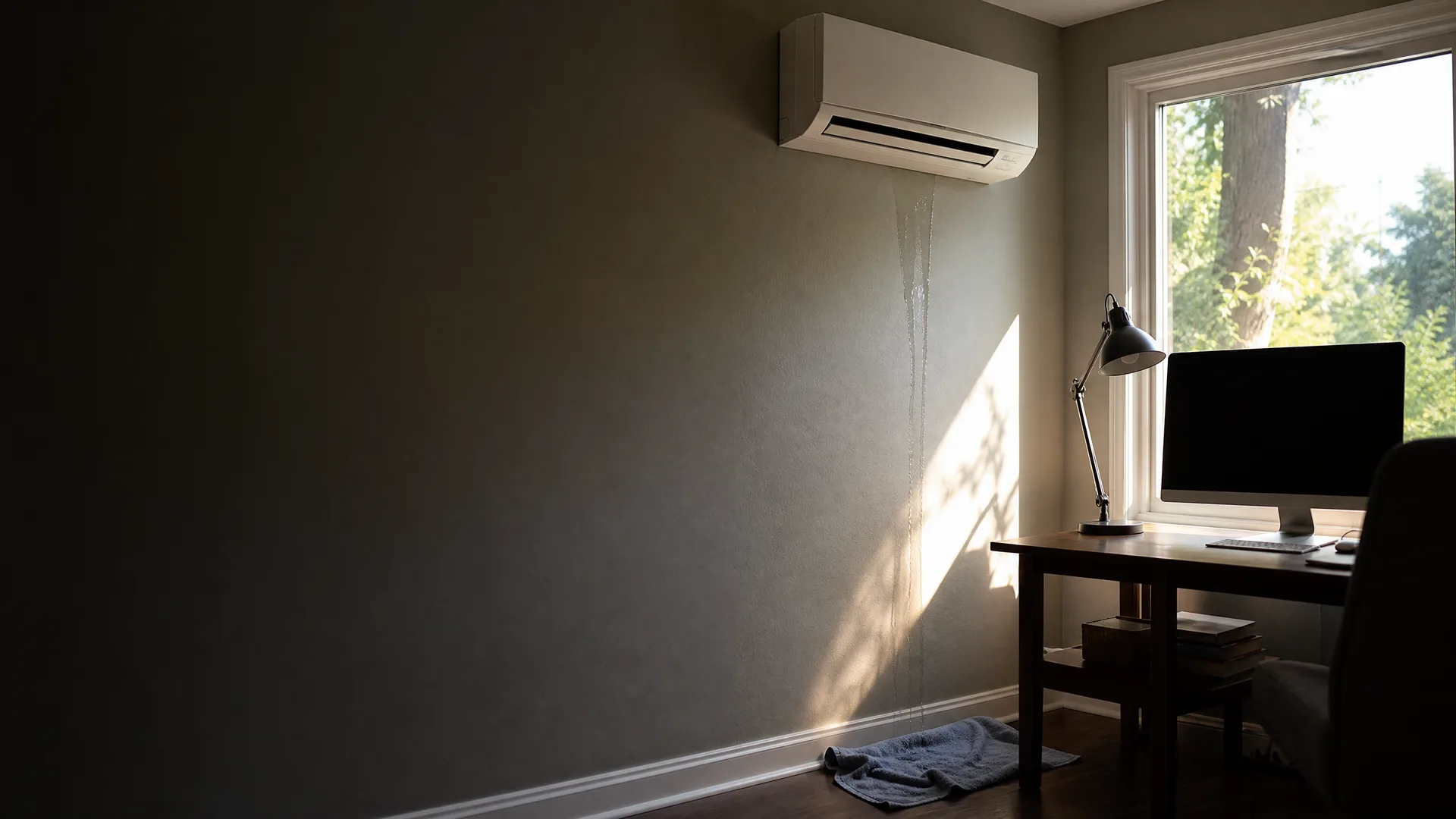
A wall-mounted mini-split air conditioner leaking water down a dim gray wall onto a towel on the floor, beside a window with a desk, lamp and monitor.

It's August, the middle of the afternoon, and you're at the desk in your home office trying to get through a stack of work before the kids are back from camp. You notice the carpet feels damp under your sock before you see anything. Then you look up at the wall under the indoor unit and there's a dark streak running down from the case, the paint starting to bubble a little near the bottom. You grab a towel from the hall closet and lay it under the unit, already thinking about the drywall. The air conditioning is still blowing cold. It's just the wall, and the floor, that are wrong.

What is that water doing under your mini split in January?

You might find a damp patch on the wall under the indoor unit, or a small puddle on the floor below it that shows up again a day or two later. Sometimes it's a stain spreading across the ceiling if the unit sits up high. The drip might only happen partway through the day, or after the system has been running a while. Left alone, that water finds its way into drywall and flooring, and once it's inside a wall it can sit there and breed mold without anyone seeing it. If the leak is coming from ice on the coil, the system is also working harder to heat the house while it's doing it, right when Delaware power bills are already steep for the season.

  1. The indoor coil pulls heat from the room air as it runs.

  2. Any ice left on the coil from a defrost cycle starts to melt.

  3. Meltwater drips into the pan beneath the coil.

  4. The pan directs water into the drain port and line.

Power costs 17.15 cents per kilowatt-hour statewide

A leaking mini split that keeps running a repair call off can quietly cost you. With power priced the way it is in Delaware, a system icing up and short cycling to compensate runs longer than it should, and that shows up on your bill before you ever spot the puddle.

EIA-861 2025 statewide residential average

A white wall-mounted mini-split indoor unit installed high on a gray interior wall, with a sofa, dark table and window visible in an adjoining room to the right.
The indoor unit sits flush on the wall, dry underneath, running quiet while it keeps the house warm.
A wall-mounted mini-split air conditioner indoor unit with a dusty beige casing and dark louvered vent, installed near the ceiling on a plain beige wall.
A yellowed case and dust on the louvers point to a coil that's been icing and dripping for a while.
A single-story house with light gray horizontal siding, dark gray shingled gables, black shutters and a dark front door, fronted by a mulched bed of small shrubs and a large lawn under a clear blue sky.

Summer here is the reason the drain line gets a workout the rest of the year never tests. With a dew point averaging 65°F across June, July and August, the indoor coil spends those months pulling a steady load of moisture out of the air, and the drain pan and line carry that water out without much trouble while everything stays warm and flexible. Winter is different. The same line that handled a humid summer without complaint can crack, stiffen, or clog once temperatures drop, and any film left behind from summer condensation gives algae or sediment somewhere to catch. A line that drained fine in July can back up in January.

NASA POWER T2MDEW county cells weighted by homes

A woman in a cream sweater and jeans stands in the open doorway of a white stucco house, holding the dark door, while a man in a dark quilted jacket seen from behind walks toward the entry past potted plants.

What a leak costs you at home in January

A puddle under the indoor unit in winter usually means it's time to stop and wait on a drip, not run the space heater while you're at it. If it's sitting over a wood floor or carpet, that water doesn't dry fast in a closed-up house in January, and a damp spot you catch today can turn into a soft, stained patch on the floor or wall by next week. If the unit is mounted above a stairway or a bedroom, the drip finds a new path down and shows up somewhere you don't expect.

None of that is something to sort out room by room on your own. A contractor who works on mini splits in Delaware can look at the coil, the drain line and the pan and tell you which one is actually causing it, and once you send the request, that part of it is off your plate. You stop guessing at buckets and towels and wait for someone who already knows where to look.

Interior corner of a dining room with a round wooden table, a ceramic vase holding olive branches, a dark spindle-back chair near a curtained window, and a sideboard with a lamp against beige walls.
A white wall-mounted mini-split air conditioner near the ceiling of a beige interior corner, with a green houseplant and a curtained window at the lower left.

A clogged line in a heated room

Most Delaware homes heat with gas, and the room with the indoor unit stays warm all winter even when the mini split is only running for backup heat or not at all. That warmth doesn't stop the drain line from clogging. Algae and dust left over from summer dry out and cake inside the line, and a slow drip from a partial clog can sit there for weeks before anyone notices. By the time a stain shows up on the wall, the blockage has likely been building since before the leaves turned.

A white wall-mounted mini-split air conditioner indoor unit on a plain light gray wall, positioned to the right of frame.

A frozen coil in an unheated one

If the indoor unit sits in a garage, sunroom, or other space that isn't on the gas heat, the coil can ice up during a heating cycle the same way it would in summer. The ice holds until the system cycles off, then melts all at once and overflows the pan. This kind of leak tends to show up fast, within a day or two of a cold snap, and it stops as soon as the unit quits trying to heat a room that's fighting it on temperature.

A mini split dripping water in January comes down to a handful of things: a clogged drain line, a dirty filter freezing the coil, a line that's lost its slope, or a trap holding water where it shouldn't. None of that clears up on its own, and running the system while it leaks only lets water sit against your wall or floor longer than it needs to. You don't have to figure out which one it is. Once you send the form, the work of finding someone who can look at the line and the coil is off your plate, and that's one less thing sitting on your list this winter. Dry under the indoor unit, air moving the way it should, no stain creeping across the ceiling below it. That's the state the system is supposed to hold through a Delaware winter, gas heat running or not. Getting there just means someone qualified gets eyes on it.

Interior living room with a white wall-mounted mini-split air conditioner high on a beige wall, a light gray sofa with cushions, a potted small tree, a stacked-stone fireplace with wood mantel and mounted TV, and a cable railing at left.

A local pro for your mini split repair

Get my match

Get the mini split repair search off your mind today.

You're not committing to anything by asking.