Defrost cycles run every 30 to 90 minutes
Your mini split reverses itself on a timer to melt that coil off. If the ice keeps building past a normal cycle, the reversing valve or a sensor may not be switching when it should.

Ice on your mini split's outdoor unit in winter is normal up to a point. The coil pulls heat out of cold air, and moisture in that air freezes on the coil's surface as it does. On a Delaware winter day with damp air near freezing, that frost builds fast. A mini split handles this by switching into defrost every so often, running heat through the outdoor coil to melt the ice off before it goes back to heating. If the ice is thin and melts within an hour or so, the system is doing its job. If it keeps building, covers the whole unit, or never seems to clear even after the system defrosts, something is keeping it from defrosting the way it should. That can be a fan that isn't moving enough air across the coil, a sensor reading the coil temperature wrong, or a refrigerant charge that's off. Left alone, a unit stuck in a frozen state stops heating your home and can damage its own compressor.




Your mini split reverses itself on a timer to melt that coil off. If the ice keeps building past a normal cycle, the reversing valve or a sensor may not be switching when it should.
A thick, solid sheet instead of a thin coat means something's wrong, often low refrigerant or a blocked outdoor fan. A Delaware tech who works on these units through the winter can tell which from a look.
The indoor coil pulls heat from outside air into your home
Moisture in that cold air freezes onto the outdoor coil
A sensor reads coil temperature and triggers the defrost cycle
The reversing valve flips, sending hot gas to the outdoor coil
Walk out and look at it. Normal frost is thin and even, and it clears within an hour. What you're more likely seeing on a cold Delaware morning is a solid white or gray shell covering the coil, sometimes thick enough to hide the fins underneath. The fan might be caked in ice too, or struggling to turn at all. You may notice the unit running longer than usual without warming the house the way it should, or a hissing, groaning sound as it tries to push air through blocked coils. Left alone, that ice forces the compressor to work harder in cold it wasn't built to fight, and a compressor that strains all winter doesn't last as long as one that doesn't.
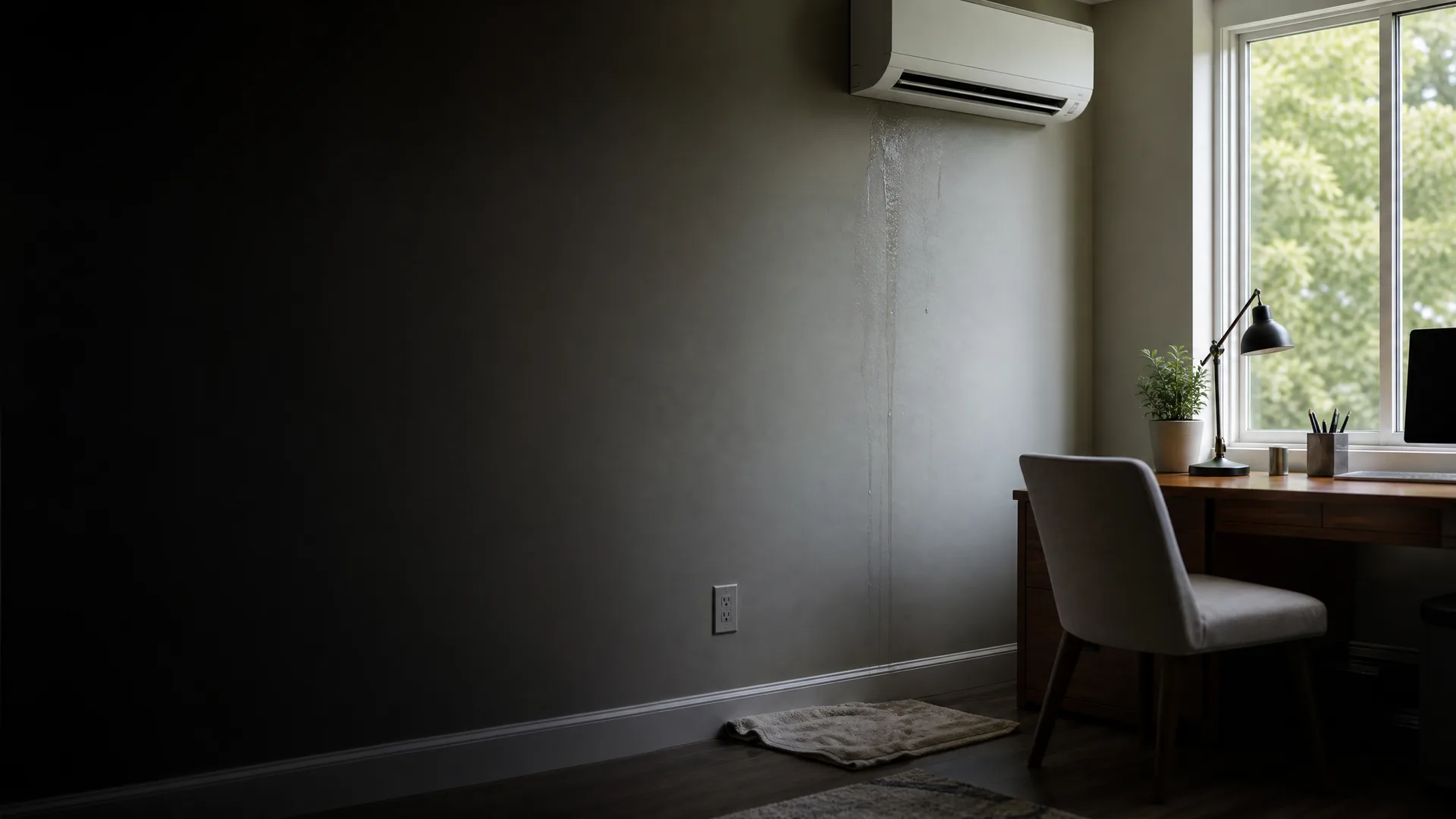
It's gone cold enough this week that you've had the mini split running nonstop in the office, and this afternoon you notice the wall under the indoor unit is wet. A streak runs down from the housing to the baseboard, and the carpet underneath has gone dark. You grab a towel and press it against the wall, and it comes away soaked. The unit's still blowing warm air like nothing's wrong. You think back to the ice you saw caked on the outdoor unit this morning when you walked past it to get the mail, and figure the two have to be connected.


At 17.15 cents per kilowatt-hour, a mini split stuck in constant defrost because of a bad sensor or valve is running its compressor and backup heat strips far more than it should. That shows up on your bill fast, and it's a sign the unit needs a look before the cold sets in further.
EIA-861 2025 statewide residential average
Some homeowners wait, figuring the frost will clear on its own once it warms up a few degrees outside. Sometimes that's true. But if a sensor or the reversing valve is behind the ice, waiting doesn't fix anything. The unit keeps cycling, the ice keeps coming back, and the compressor keeps working harder than it should. Delaware power isn't cheap, and a unit stuck in bad defrost cycles all winter will show that on your bill before it shows any other sign something's wrong. Waiting costs you the one thing you can't get back, which is the months you spent running a system that needed a repair.
A tech who works on mini splits all winter in Delaware has seen this exact problem plenty of times and knows what to check first: the defrost sensor, the reversing valve, the refrigerant charge. A local contractor can look at your specific unit, tell you what's actually failing, and fix it instead of guessing. Since it's one contractor and not several, you won't have a handful of companies calling you about the same job. Most homes here heat with gas, so your mini split isn't carrying your whole heating load, but a frozen outdoor unit still means it's not doing the job it's there for.


Your request goes to one pro, not a list of companies.
You only hire the pro if you want to.
A mini split with a frozen coil will keep trying to heat your home. The outdoor unit can't pull heat from the air through a shell of ice, so it leans harder on the backup strips, or it just can't keep the room warm. You'll notice the air coming from the indoor unit turning cooler, or the room losing ground on a cold afternoon even with the thermostat set the same as always.
A licensed technician who works on these units through a Delaware winter can tell you fast whether the sensor or the reversing valve is the problem, because they've seen it fail both ways before. Once that part is replaced, the unit goes back to defrosting on its normal timer. The ice clears within the hour like it should, the coil pulls heat the way it's built to, and the strips stop running overtime to cover for it.
You've noticed the frost is worse when you check the outdoor unit in the morning than when you look at it in the afternoon. It runs all night while you sleep, and by sunrise the coil can look solid. You're trying to figure out if that pattern means something's wrong or if it's just how these units behave overnight in the cold.
Delaware nights in winter run colder than the daytime high, and colder air sitting near the ground often carries more moisture than it does once the sun's up and things dry out a bit. That combination, more moisture and a colder coil, means more frost forms on the outdoor unit overnight. Your mini split still runs its defrost cycle in the dark same as it would at noon, but it has more ice to clear each time. If the coil looks clean again a short while after sunrise, the unit caught up fine on its own. If it's still coated well into the morning, the defrost cycle isn't keeping pace, and that points to a sensor or valve that needs a look.

Summer here isn't just hot. Homes across Delaware see a summer dew point around 65°F, the figure that measures how much moisture is actually hanging in the air, according to NOAA climate data. That kind of mugginess means your mini split spends all summer pulling water out of the air along with heat, and its coil and drain line stay wet for months. Winter is a different problem, but it starts from the same equipment working hard year round. A unit that's been running near its limit all summer doesn't get a break before the cold sets in, and any sensor or valve that was already struggling has had no chance to rest before frost season tests it again.
NASA POWER T2MDEW county cells weighted by homes


A little frost on the outdoor coil on a cold Delaware morning doesn't mean much. It's doing what it's built to do, and it'll clear within the hour. What matters is whether it actually does clear, and whether it looks the same tomorrow as it did today. If the coat of ice keeps coming back heavier, or never fully melts between cycles, something inside the unit, usually a sensor reading coil temperature wrong or a reversing valve that's stuck, isn't switching when it should. That's not a problem that gets better on its own. The compressor and backup strips keep working harder to make up for a coil that can't pull heat through a shell of ice, and that cost lands on your next bill whether you've called anyone or not. If water's already shown up on the wall or floor under the indoor unit, the ice outside has gone past a nuisance.
A contractor who works on mini splits through a Delaware winter has run into this exact failure before, the same sensor or the same valve, often enough to know where to look first. That's different from a general HVAC call where mini splits are one of several systems on the truck. Send one request and you're matched to one licensed contractor local to you, not a list of five companies calling back at once while you're trying to figure out why your living room won't hold heat. Once that request is sent, finding someone to look at it stops being something you have to manage yourself.
The pro who reaches out is licensed in Delaware.
Asking costs nothing, and the choice to hire stays yours.