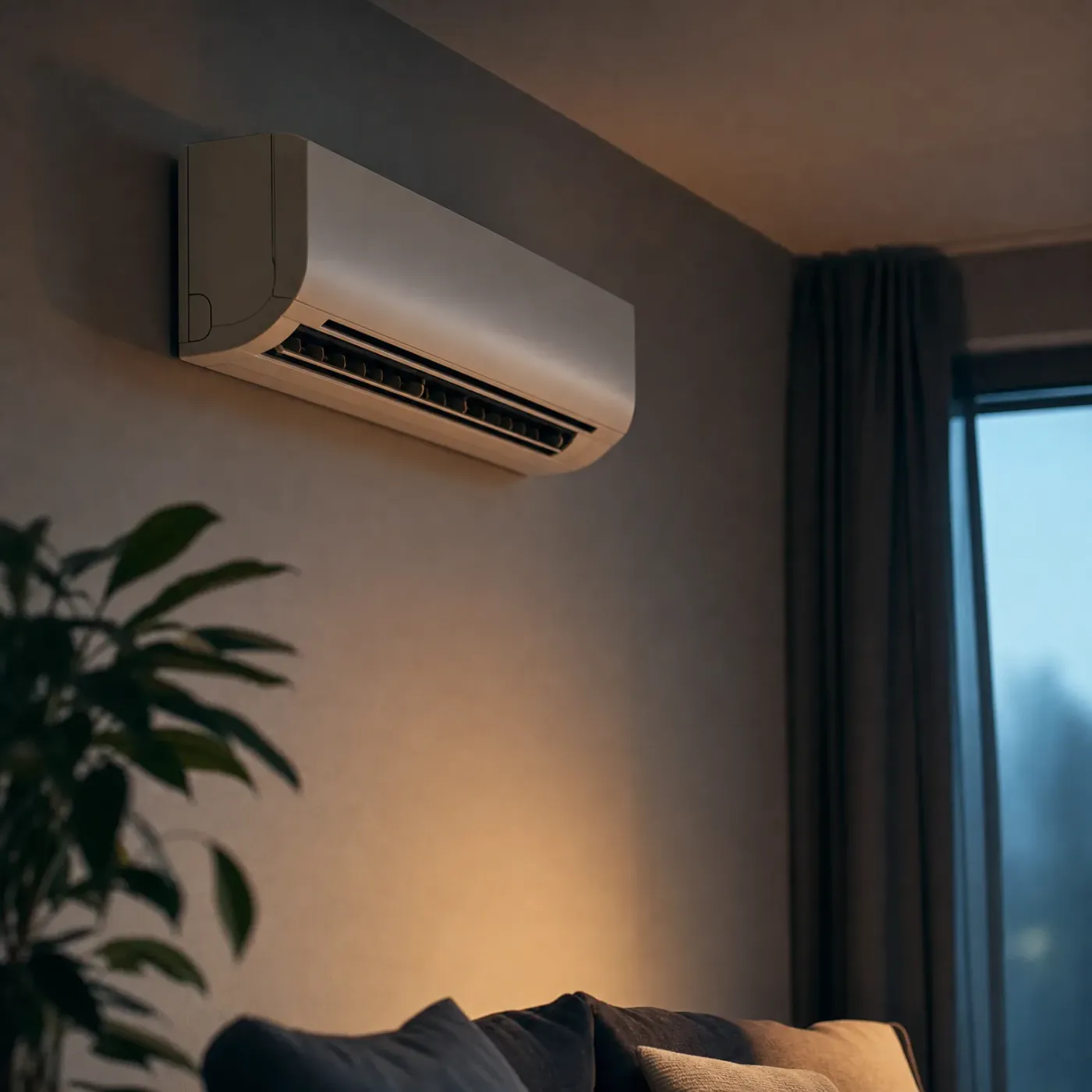

A white wall-mounted mini-split indoor unit near the ceiling of a dimly lit room, with a curtained window at right, a leafy potted plant at lower left, and a cushioned sofa at the bottom.

Get your mini split to the right pro

Can a mini split heat a basement in a Delaware winter

A mini split can heat a basement in a Delaware winter, but whether yours can depends on sizing and how cold your basement runs against the unit's output. This page gets into what makes that work and what causes it to fall short. If you want a read on your own setup, a local contractor who installs these year round can look at it and reach out.

Get matched

A mini split can heat a basement through a Delaware winter, but most of them do it with help. The outdoor unit loses output as the temperature drops, and on the coldest nights here, down in the 20s and sometimes lower, a single mini split sized for an average day can fall behind. Basements make this harder because they sit against cold ground on most sides, so they lose heat differently than an upstairs room does. A mini split that was sized for the square footage alone, without accounting for that, will run constantly on the hardest nights and still lose ground. One sized for the basement's actual heat loss, with enough capacity in reserve for low temperatures, keeps up. Since most homes here heat with gas, a basement mini split is often standing in on its own, not backed up by the furnace, which makes correct sizing the difference between a basement that stays warm and one that doesn't.

A white wall-mounted mini-split air conditioner unit installed high on a light gray interior wall near the ceiling, with a white-framed window and green foliage visible at the left edge.

Sized right for the space

A mini split that matches your basement's size keeps up on all but the coldest nights. It cycles on, holds a steady temperature, and the room feels even from floor to ceiling. This is what correct sizing and a clean installation look like day to day.


A dusty white wall-mounted mini-split air conditioner installed high on a beige interior wall below a molded ceiling trim.

Undersized or starved for airflow

A unit too small for the basement runs constantly and still loses ground once it drops into the 20s outside. Dust packed on the coils and a dirty filter make it work harder for less heat, and a basement with poor airflow around the indoor unit never warms evenly.

Mini split alone or with the furnace

Mini split alone

  • On nights in the 20s, the outdoor unit's heat output drops off, and a basement loses heat faster than an upstairs room because the ground around it stays cold.
  • If the basement has a gas line already, running a mini split alone down there means the furnace isn't covering that space at all.
  • A correctly sized unit will hold the basement through most of the winter without any backup, cycling on and off as it normally would.
  • Electric heat costs more per hour than gas here, so leaning on the mini split hard on the coldest nights shows up on the power bill.
  • A basement with poor insulation or an uninsulated slab will ask more of the unit than the square footage alone suggests.

Mini split plus furnace

  • Most Delaware homes already heat with gas, so the furnace or its ductwork may reach the basement and can carry the load on the coldest nights.
  • Splitting the work means the mini split handles the basement most of the season and the furnace only kicks in when the temperature really drops.
  • This keeps the electric load off the mini split during the hours it would otherwise run hardest and least efficiently.
  • It depends on whether the basement has a duct run or register already, which isn't something you can tell without checking.
  • A contractor who installs mini splits in Delaware basements regularly can look at what's down there and say whether it's worth tying the two together.
A white wall-mounted mini-split air conditioner installed near the ceiling on a light-colored interior wall, with a window and green foliage visible at the left edge.

Clean and running the way it should

A mini split that's clean moves the air it's rated for. The coil and vents stay clear, so the unit reads your basement's temperature correctly and holds it, even against a cold floor and concrete walls on a January night.

A dusty white wall-mounted mini-split air conditioner indoor unit installed high on a beige interior wall below a white ceiling and trim.

Dust changes what the unit can do

Grime on the vents and intake grille blocks airflow before it ever reaches the room. A basement already loses heat faster than the floor above it. A soiled unit struggling to move air is working against that same basement, not for it.

A woman wrapped in a cream textured blanket sits in an armchair beside a lit lamp and a dark window, with an open book in the foreground.
An older woman with short gray hair in a cream cable-knit turtleneck sweater smiles while looking to the side in a wooden kitchen, with a round loaf of bread on a board in the foreground and a lit candle by a dark window.

Output drops as it gets colder

A mini split's heat output falls as the outdoor temperature does. The capacity on its spec sheet is rated at a specific outdoor temperature, not at zero.

Reach a local pro

Basements hold cold longer

Concrete walls and the ground outside them stay cold well after the air above does. That's what a correctly sized unit and installation have to work against.

Reach a local pro
An older man with gray hair and a beard, wearing a dark coat dusted with snow, stands smiling in a doorway of a warmly lit home with a sofa, lamp and window visible behind him.
An older man with grey hair and a beard, wearing a dark coat dusted with snow, stands in a dimly lit entryway with a ceiling lamp, a side table with two shaded lamps, and a lit fireplace visible in a room beyond.
A bearded older man in a dark snow-dusted coat and scarf stands just inside a home's front door, with a lamp-lit room and snowy window visible behind him.
An older man with gray hair and a beard stands in a doorway of a home, wearing a dark coat dusted with snow, with a lit fireplace and lamp visible in the blurred room behind him.
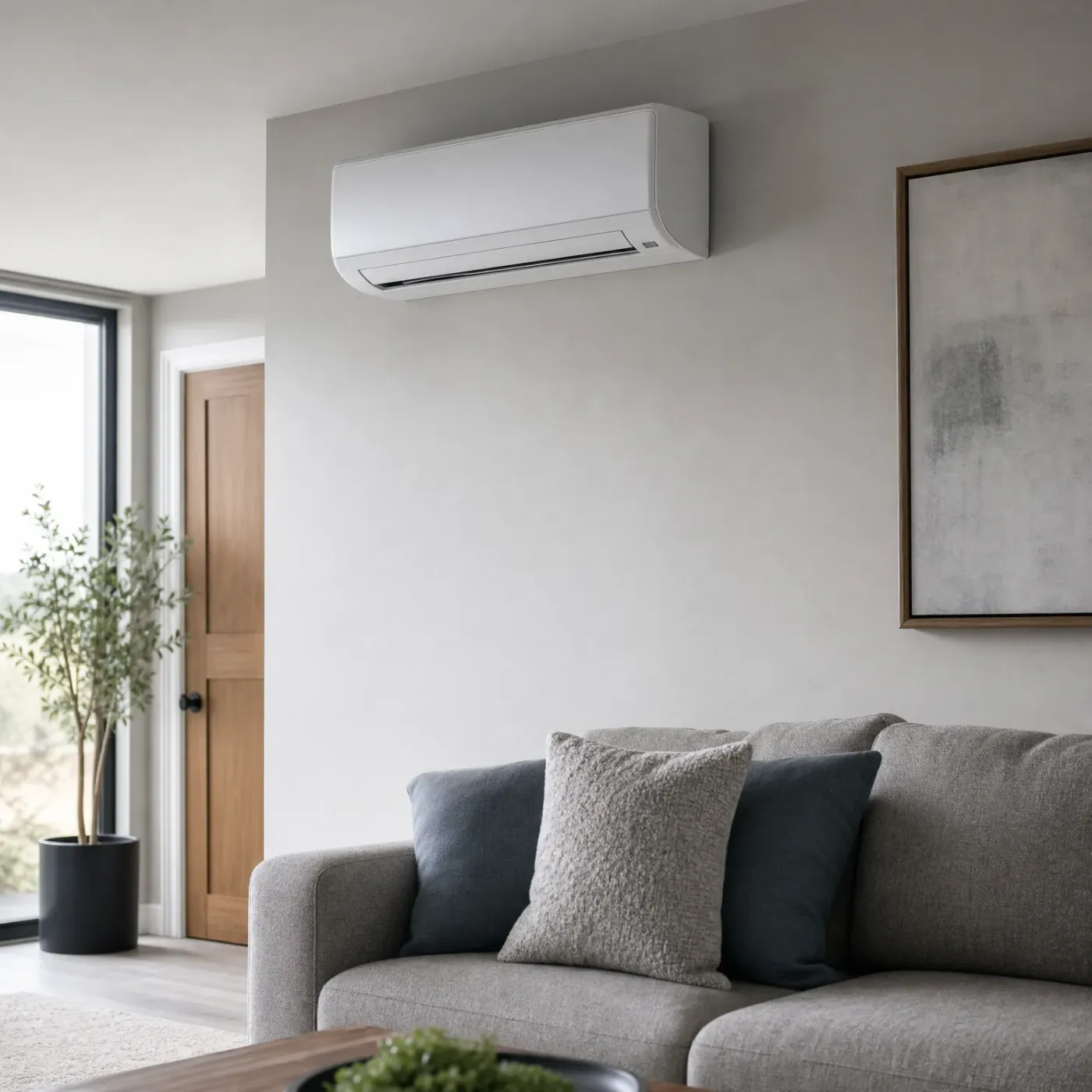
A white wall-mounted mini-split air conditioner on a light gray wall above a gray sofa with cushions, with a framed abstract artwork at right, a wooden door and potted plant at left.

Matched to your mini split job

Only one pro gets your request, so you hear from one company.

Get in touch with a local installer about a new mini split.

Find a licensed mini split pro

Sending the form costs nothing.

A white wall-mounted mini-split air conditioner on a light gray wall in an empty room with dark wood flooring, white baseboards, a tray ceiling with recessed lights, and a window at the left.
A mini split installed correctly holds the basement at temperature, with clean coils and vents that read the room right and keep the heat steady through a cold night.
A wall-mounted mini-split air conditioner indoor unit with a yellowed plastic casing and dark horizontal vent louvers, installed on a plain light-gray wall.
Dust across the top and residue around the vents mean the unit can't read the room right, and it starts losing ground once the temperature drops.

How a Mini Split Actually Heats

  • A mini split pulls heat from outside air by cycling refrigerant between the outdoor unit and the indoor head, even when it's cold out.
  • The indoor head's thermostat reads the room every few seconds and adjusts the compressor speed to match, not just on and off like an old furnace.
  • Defrost cycles kick in when frost builds on the outdoor coil, pausing heat output for a few minutes while the unit clears itself.
  • A basement's concrete slab and below-grade walls pull heat out of the room steadily, so the unit works against a constant drain a main floor room doesn't have.
  • The indoor head's fan speed and louver angle decide whether warm air reaches the far corners of the room or just circles near the unit.
  • An oversized unit short cycles, turning on and off fast without ever settling into the steady low hum that holds a basement at temperature.

A mini split doesn't make heat the way a furnace does. It moves heat. The outdoor unit pulls warmth out of the outside air, even when that air is cold, and a compressor pushes refrigerant carrying that warmth into the indoor head. The indoor head releases it into the room. All of this runs on a loop, adjusting as it goes rather than switching on and off at fixed points. The thermostat in the indoor head checks the room's temperature every few seconds and speeds up or slows down the compressor to match, which is why a mini split holds a room steadier than an old furnace that just fires and stops.

Cold outdoor air causes frost to build on the outdoor coil. When that happens, the unit runs a defrost cycle, pausing its heat output for a few minutes to clear the coil before it goes back to work. That's normal, and it happens more often on the coldest nights.

A basement works against the unit in a way a main floor room doesn't. The slab and the below-grade walls sit against cold ground all winter, and that ground pulls heat out of the room steadily, not just on the coldest days. The indoor head has to keep up against that constant drain, and where the air actually goes matters. Fan speed and louver angle decide whether warm air reaches the far corners of the basement or just circulates near the unit itself.

A wall-mounted mini-split air conditioner indoor unit with a dusty, discolored cover, installed near the ceiling on a plain light-colored wall.
Before you get your mini split installation
A white wall-mounted mini-split air conditioner unit installed high on a light gray interior wall below crown molding, with a bamboo-shaded window at the lower left.
After you get your mini split installation

Power costs 17.15 cents per kilowatt-hour statewide

At that rate, a mini split running hard on the coldest nights to cover your basement adds up faster than it would upstairs, where the walls aren't fighting cold ground. Sizing it right so it isn't straining keeps that cost down.

EIA-861 2025 statewide residential average

A woman stands in the open doorway of a white stucco house holding the dark door, facing a man in a black cap and shirt seen from behind in the blurred foreground, with a potted flowering plant beside the entry.

A mini split can carry your basement through winter, if it's sized for it

That's the answer. Match the unit to the room and the install to the house, and it holds the basement at temperature on everything but the hardest nights. Get the sizing wrong, or leave the coils and vents dirty, and it falls behind right when you need it most.

What matters now is making sure yours is one of the ones that works. A contractor who installs mini splits in Delaware basements every winter has seen which ones hold up against cold concrete and which ones don't, and can look at your space and tell you which side of that line you're on. If you'd rather not guess, you can get matched with a licensed local contractor who covers your area. One contractor, not several, reaching out to go over your basement with you.

A wooden table holding a stone vase with a bare branch, two stacked books and a small dark bowl, beside a window with green foliage outside and a sofa in the dim background.
A modern two-story house with dark siding and stone base at dusk, with lit soffit lights, a path of large rectangular pavers set in dark gravel, planting beds, a lawn, and an orange and blue sunset sky above distant trees and water.

Mini Split Installation

A mini split pro near you

Step 1 of 3: Equipment
  • A corner of a room with an upholstered wood-framed armchair holding a floral pillow, a round side table with a ceramic lamp, books and a vase of greenery, a framed landscape painting on the wall, a patterned rug, and a sunlit multi-pane window.
    • Say what's going on with your mini split, and a pro who works on them reaches out.
    • A local pro who knows mini splits gets your details and gets in touch.
  • Interior corner with a wood-framed window showing green foliage outside, a framed landscape print on a beige wall, and a rounded stone vase of leafy branches on a wooden cabinet.
    • Send the form and stop researching installers for the new mini split.
    • One request ends the search for a mini split installer.
  • A pale ceramic vase holding olive branches sits on a dark wooden countertop beside a carved wooden dough bowl, next to a wood-framed window and a light painted plank wall.
    • Explain the job once and skip repeating it on every call.
    • Skip searching for a mini split pro and answer a few questions instead.
  • A dark wood round side table holding a brass lamp with a cream shade, a blue-and-white patterned bowl, and a white textured pot of greenery, beside an upholstered chair with a gray patterned cushion and a white-framed window showing green trees and flowering shrubs.
    • Your request goes to one pro, not a list of companies.
    • The pro who reaches out is licensed in Delaware.