Best mini split setting for a Delaware winter

One request and finding someone for the tune-up is handled.

Let a pro reach out

What temperature should I set my mini split to in winter in Delaware?

Most homes in Delaware heat with gas, so a mini split is often the backup or the system for a room or two the furnace doesn't reach well. You want a number that keeps that space comfortable without running the unit harder than it needs to, especially with what power costs here.

Set it between 68 and 70 degrees

A mini split heats most efficiently when it isn't fighting a big gap between the set temperature and the room. Setting it to 68 or 70 and leaving it there lets the unit hold steady instead of cycling hard to catch up, which is what drives the power bill up. Pushing it to 74 or 75 on a cold night makes the compressor work much harder for a few extra degrees, and in a Delaware winter that can mean long stretches of hard running. If the mini split is covering a room the gas furnace doesn't reach well, a steady setting in that range keeps it comfortable without asking the unit to do more than it's built for.

A smiling man in a navy long-sleeve shirt sits at a wooden table in a kitchen and dining area, with a ceramic mug, a potted plant, and a sliding glass door behind him.
A smiling bearded man in a green henley shirt stands at a kitchen island with a gray mug, looking off to the side, with a dining area and shelves blurred behind him.
A smiling bearded man in a navy sweater sits at a white kitchen island with a ceramic mug, with open shelves, potted plants and a range hood behind him.
A smiling man in a dark olive long-sleeve shirt sits in a kitchen beside a counter with a dark mug, with a dining table, sideboard and hallway visible in the blurred background.

How Your Mini Split Heats

  • A mini split warms with a heat pump cycle, pulling heat from outside air even when it's cold out, not with a resistive element.
  • Below freezing, the outdoor unit runs a defrost cycle, briefly reversing to melt ice off its coil before switching back to heating.
  • During defrost the indoor fan may pause or blow cool air for a few minutes, which is normal and not a sign of trouble.
  • Setting the thermostat lower at night and raising it in the morning forces the compressor to work harder to catch up, using more power than holding one steady number.
  • A dirty outdoor coil or blocked airflow makes defrost cycles longer and more frequent, which is something a maintenance visit checks and clears.
  • The indoor unit's filter restricts airflow across the coil long before it looks visibly dirty, so a clean look isn't proof it's clear.

A mini split doesn't make heat the way a space heater does. It runs a heat pump cycle, moving warmth from the outside air into your home even when that air feels cold. Refrigerant in the outdoor unit absorbs heat from outside, and the indoor unit releases it into the room. That's why the outdoor unit keeps running through a Delaware winter instead of shutting off once it's cold out.

When outdoor temperatures drop below freezing, frost builds on the outdoor coil. The system handles this on its own with a defrost cycle: it briefly reverses direction, sending warm refrigerant outside to melt the ice, then switches back to heating. You might notice the indoor fan pause or blow cool air for a few minutes during this. That's the system clearing itself, not a malfunction.

Two things make that cycle harder than it needs to be. One is how you run the thermostat. Dropping the temperature at night and raising it again in the morning makes the compressor work harder to catch up, which draws more power than leaving it on one steady number. The other is airflow. A dirty outdoor coil or a restricted indoor filter means defrost cycles run longer and more often, and the filter can be choking airflow well before it looks dirty to the eye. Both are things a maintenance visit checks directly, rather than something you can judge by looking at the unit.

A white wall-mounted mini-split air conditioner on a beige interior wall, with a cream curtain and window at left, a potted plant on a ledge at right, and a wood floor below.
Set the temperature and leave it, and the unit cycles on and off as it should, coil and vents clear.
A dusty, discolored white wall-mounted mini-split air conditioner unit installed high on a plain interior wall below a white ceiling molding.
Skip a season of cleaning and dust builds on the coil, and the unit works harder for the same heat.
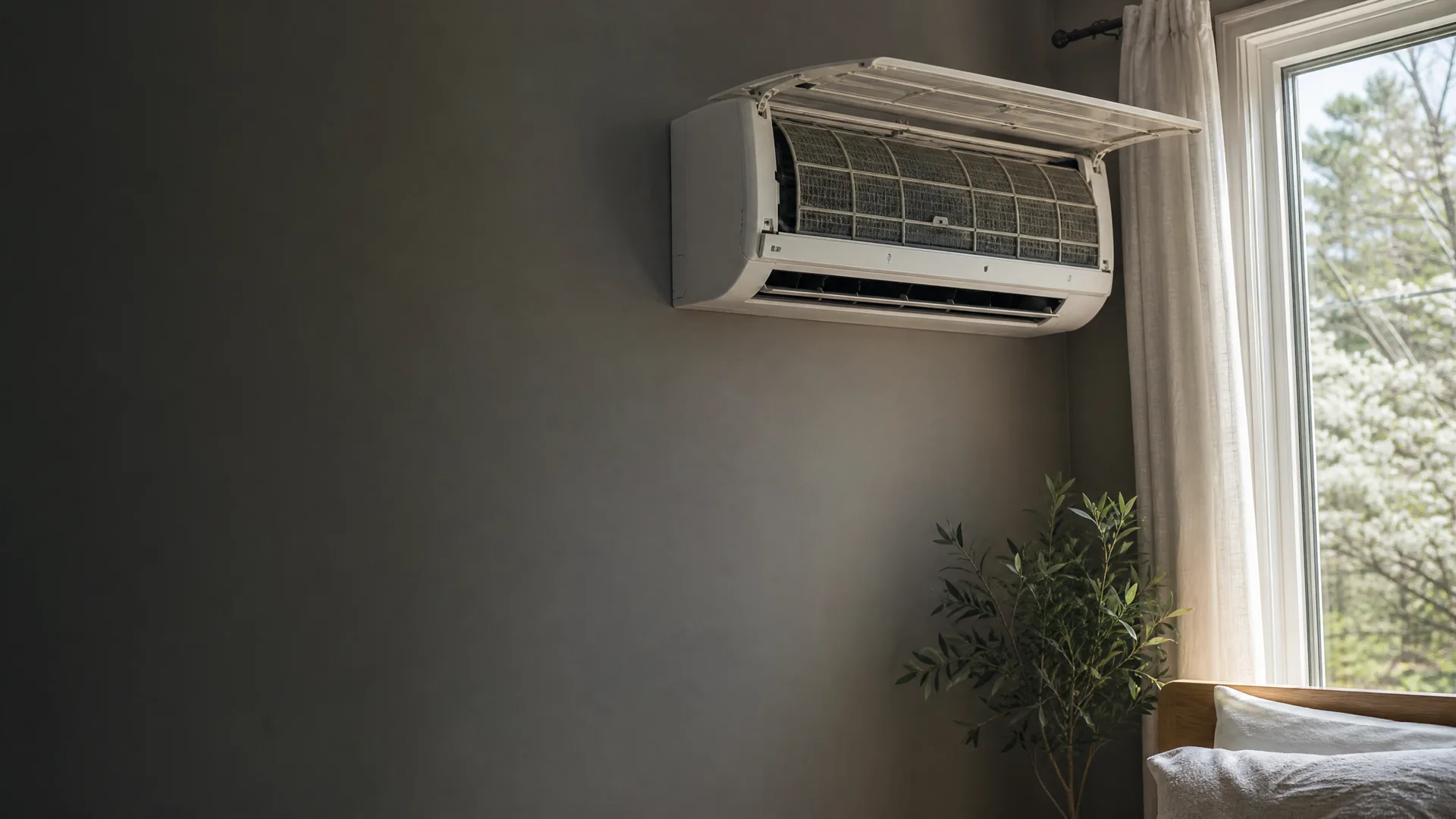
A wall-mounted mini-split air conditioner with its front cover open exposing the filters, on a gray interior wall beside a curtained window with green trees outside and a potted plant below.

You're changing the sheets in the spare room when you notice it, that faint musty smell that's been nagging you since the unit kicked on this morning. Outside the window, the maple's just starting to bud. You pop the front cover on the indoor unit and there it is, the filter screen gray with dust, thick enough that you can't see through it to the coil behind. You run a finger across it and it comes away gritty. It's been a long winter of steady use in this room, and you can't remember the last time you pulled this cover. You set it down on the bed, meaning to rinse it, and wonder what else back there needs a look.


Let someone else find the pro

A mini split left to run all winter picks up dust and buildup in places you can't see from the front cover. The coil loses some of its grip on the air passing over it, the filter gets choked, and the unit starts working harder to hold the same room at the same number on the thermostat. With power costing what it does in Delaware, that difference shows up on the bill before it shows up as a problem you'd notice by feel. A maintenance visit now, before the cold months really settle in, catches that early. Finding someone for this usually means searching around, calling a few places, explaining the same thing about your unit three or four times, then sitting with quotes trying to guess who's worth the call. Send the request here instead and that part is done. One contractor gets it, and the rest of your winter is just you and a mini split running the way it's supposed to.

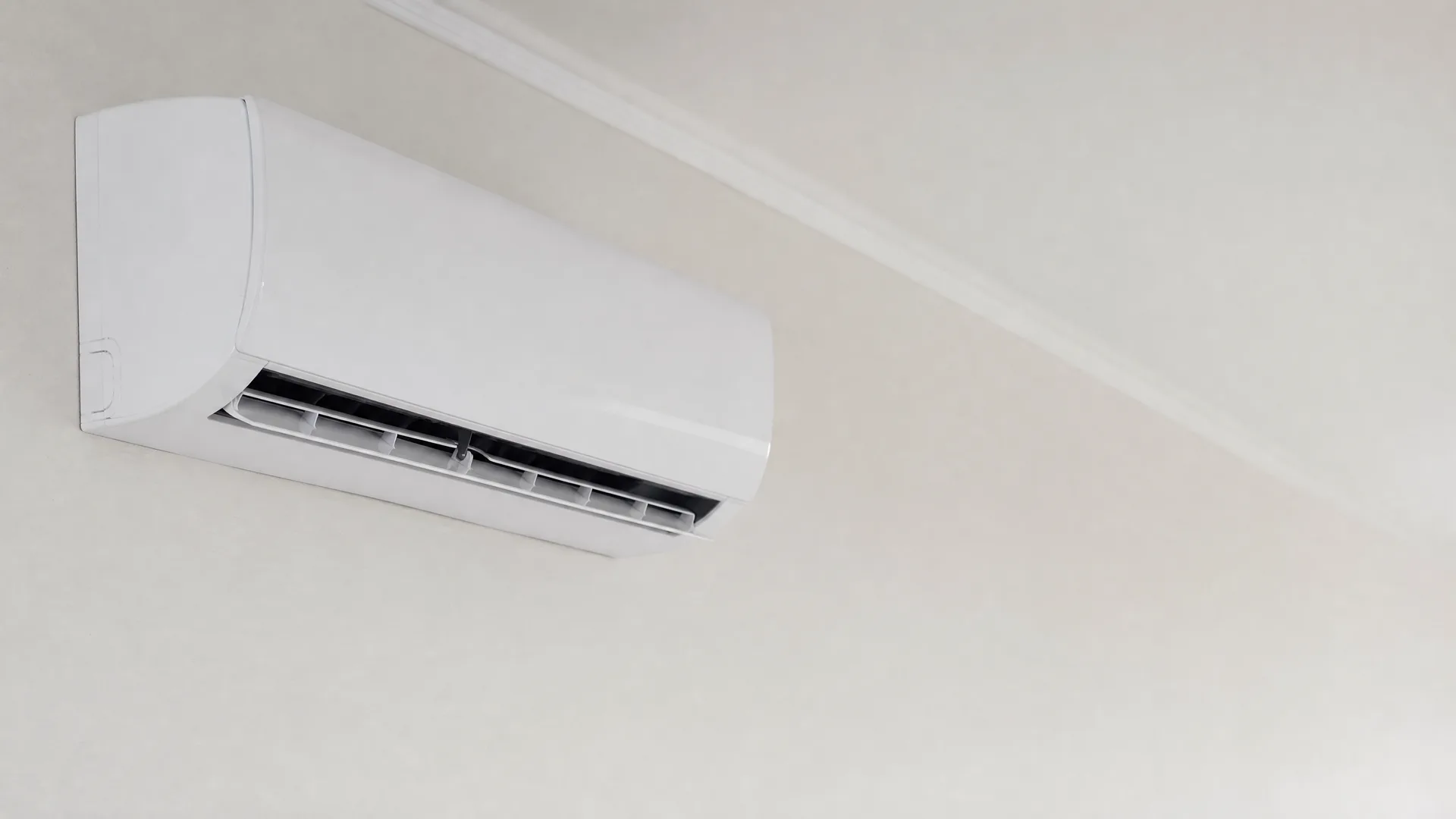
A white wall-mounted mini-split air conditioner indoor unit installed near the ceiling on a plain beige wall.

Why the setting alone isn't enough

A mini split set to the right number still depends on the indoor coil being clean to move that heat into the room. Dust on the coil acts like a blanket. The unit senses the room hasn't reached your setting, so it keeps calling for heat, and the outdoor unit keeps running longer than it needs to on a system that's already working against the cold.

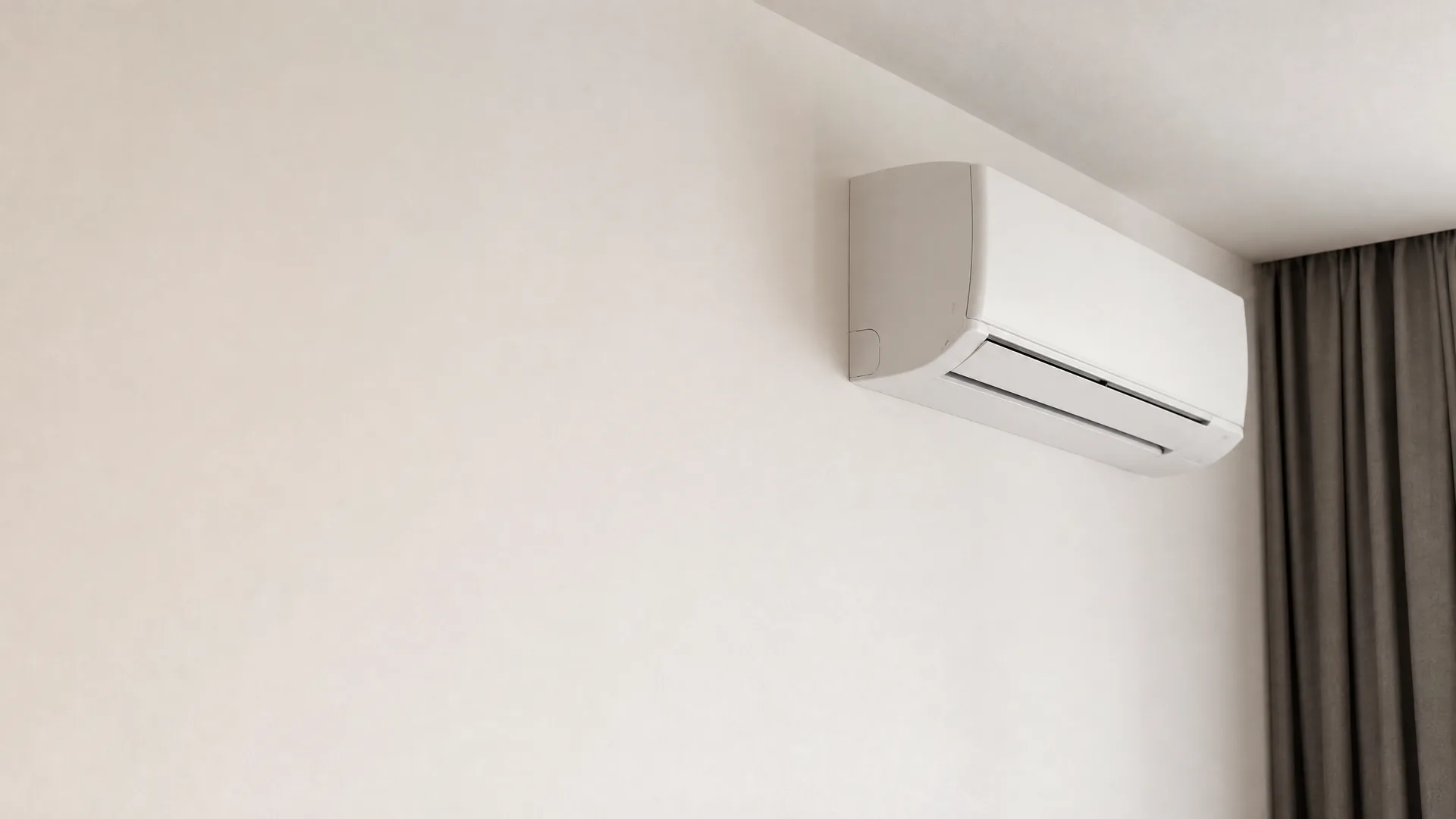
A white wall-mounted mini-split air conditioner on a plain off-white interior wall, with a gray curtain at the right edge.

What the defrost cycle costs you

Every time the outdoor unit defrosts, it stops heating for a few minutes to clear ice off its coil. That's normal on a cold Delaware night. But a unit with a dirty filter or a low refrigerant charge runs colder coil temperatures, which means more frequent defrost cycles, and more of those pauses where the room gets no heat at all.

Is my mini split keeping up or just running?

You've got it set where it should be, but the room next to it feels cooler than it should on a cold morning. The unit's been running longer stretches than it used to, and you notice the air coming out doesn't feel as warm against your hand as it did last winter. Maybe there's a faint smell when it first kicks on, gone after a few minutes. None of that means the setting is wrong. It usually means the unit is working harder to push out the same heat, and left alone, that extra strain is what leads to a breakdown on the one night you need it most.

A white wall-mounted mini-split air conditioner near the ceiling of a room with light gray walls, white crown molding, and a beige curtain at the left edge.

Clean coil, steady heat

This is what a mini split should look like after months of winter use. No dust on the grille, no staining on the wall. Air moves through it freely, so it doesn't have to run longer than it should to hold the room at your setting.

A dusty beige wall-mounted mini-split air conditioner indoor unit installed high on a plain light-colored wall below the ceiling.

What gets missed

Dust and grime like this build up slowly, mostly on the coil you can't see from the front. By the time staining shows on the wall, the unit has been working harder for the same heat for a while. A yearly cleaning catches it before it gets here.

Power costs 17.15 cents per kilowatt-hour statewide

At 17.15 cents a kilowatt-hour, every extra degree you push past what the room needs shows up on the bill. A mini split running longer because the coil's dirty is paying that rate the whole time it struggles.

EIA-861 2025 statewide residential average

The setting itself is simple: pick a temperature that keeps the room comfortable without pushing the unit past what it needs to do, and leave it there through the winter. What decides whether that number actually holds, morning after morning, is whether the unit behind it is clean enough to keep up. A mini split with a dirty coil or a clogged filter will chase that same setting and fall short, running longer and costing more at 17.15 cents a kilowatt-hour to get there. One with a clean coil holds the room steady without the extra runtime. Maintenance is what keeps the setting honest. You already know to deal with small problems before they turn into bigger ones, and a mini split that's starting to struggle in January is exactly that kind of problem, worth catching before the coldest stretch of the season makes it worse. The number on the thermostat is the easy part. What happens inside the unit each time it reaches for that number is the part worth having checked.

A smiling man in a dark blue T-shirt sits on a light gray sofa in a living room with a wooden shelf and window behind him, with a laptop edge visible in the foreground.
A bearded man in a plaid flannel shirt stands indoors looking out a frost-covered window, with a steaming dark blue mug on the wooden sill and snow-covered trees outside.

Mini Split Maintenance

One request and it's handed off

One form instead of hunting for a pro who does mini split tune-ups.

A black-framed smartphone standing upright against a plain white background, its screen filled with solid green.
Step 1 of 3: Equipment